My Grandma, Marian Carrick, nee Tobin, died a year ago on 29 October 2021. She was the most incredible woman. She was born into a generation that made the most of what they had and toughed it out. I’ve never known anyone else be able to make a whole meal out of an onion and a small block of cheese! She was home when I was home sick at uni, my ear in the difficult times and I miss her greatly. She had the most beautiful hands, even when they were old hands and I still remember them vividly. When she was younger, she had the most gorgeous auburn coloured hair.
She was born in Manchester in 1928, the youngest of two daughters. Her parents ran pubs in Ancoats in Greater Manchester and they lived through the Blitz in World War Two. Both my Great Grandparents taking on responsibility as fire wardens. Grandma had so many stories about that time and many horrible memories that she wished she didn’t have but, as did everyone of that time, they made the best of it.
I remember her telling me stories about swapping pieces of shrapnel in the playground with her friends like football cards and being late for school during the war when a German fighter plane fired at people in the streets with bullets. Her teacher didn’t believe her until she read about it in the paper next day! Other tales included the Tate and Lyle factory being bombed and melted sugar running down the street and how she and her dog Teddy took refuge in their Anderson shelter in the cellar when a blast had knocked both of them out. She also turned up for a piano exam to find the venue had been bombed and when she went elsewhere to take it, her invigilator was one of the Queen’s musicians.
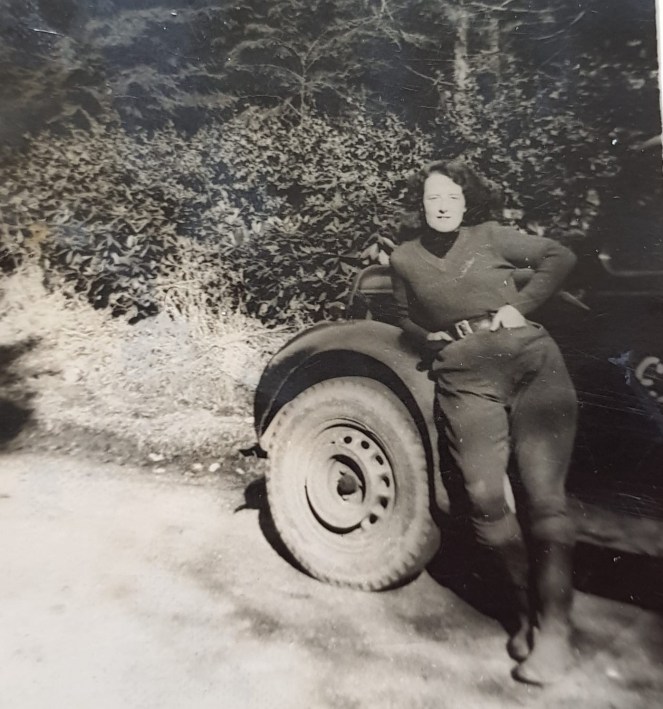
She joined the Women’s Land Army at 17 (which was the minimum official age to join) and was posted to Brampton. A very different experience for a city girl to find herself in the country.
The Women’s Land Army employed over 200,000 women between June 1939 and November 1950. Known as Land Girls, these women replaced male farm workers who had gone to war. Land Girls were critical to increasing the country’s food production. Despite having little to no agricultural experience, they ploughed, grew produce, milked cows, caught rats, drove tractors – and much more.
Grandma said they worked incredibly hard and sometimes had to work with Italian or German prisoners of war. But it was a great experience and she made life long friends including meeting my Grandad after he was demobbed from the RAF and returned to Brampton.
It took a long time for the Women’s Land Army to be officially recognised for the work they did during the war. After much campaigning from July 2008, the surviving Land Girls were able to receive a veteran’s badge. Grandma received hers at Kendal Town Hall, aged 80 and was one of her proudest moments.
 stitcherintime